


UPDATES
Hey! Hope you all are doing well!
—

I have been doing a ton of work with Astra lately, which is the latest model from OpenAI, and I've got it a lot more integrated into my own version of LifeOS. Truly impressive model, and I understand why Sam is calling it AGI for the first time.
I am now using a new model routing system that can route across different providers and models based on the intelligence level needed for a given task. I'm really hoping this can help me save a lot of tokens while keeping efficacy extremely high.
I'm going to keep messing with it and get it into the next LifeOS release if it continues to work out.
—
Some new blogs:
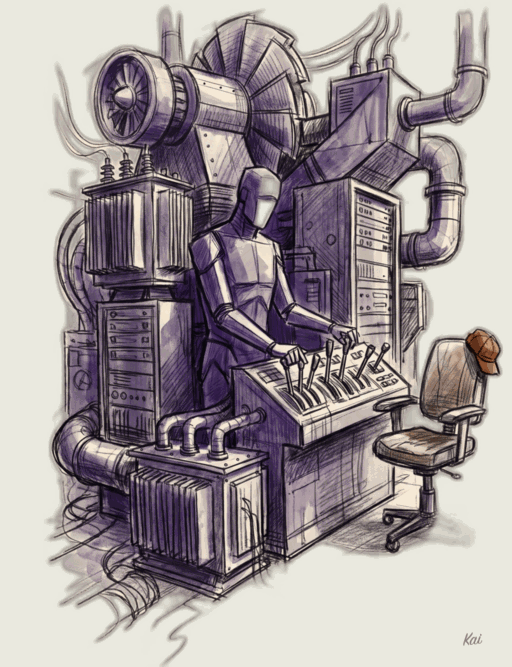
This one about a boring (and much more likely way) we could lose control to AI.
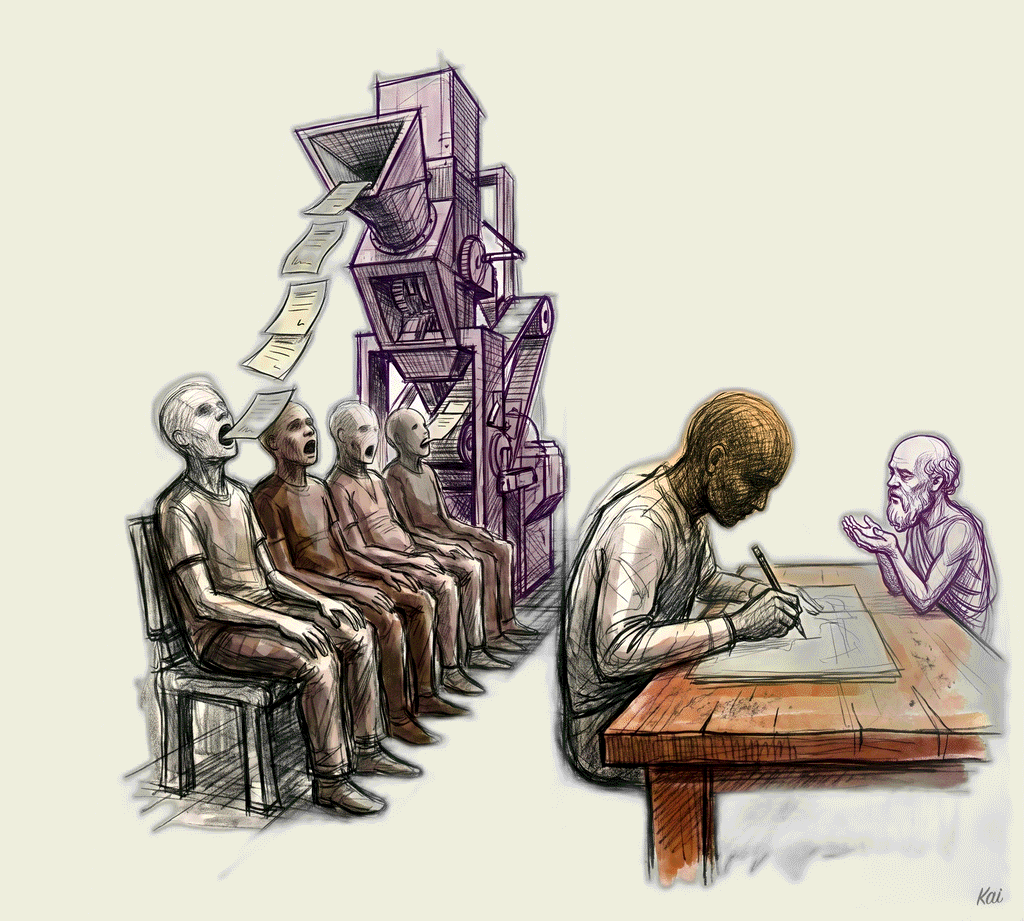
This is an update to my Socratic AI agent post, giving more detail on the agent.
If you have kids, I recommend giving their AI this skill and the intelligence to know when to answer a question versus ask them to think through it.
—
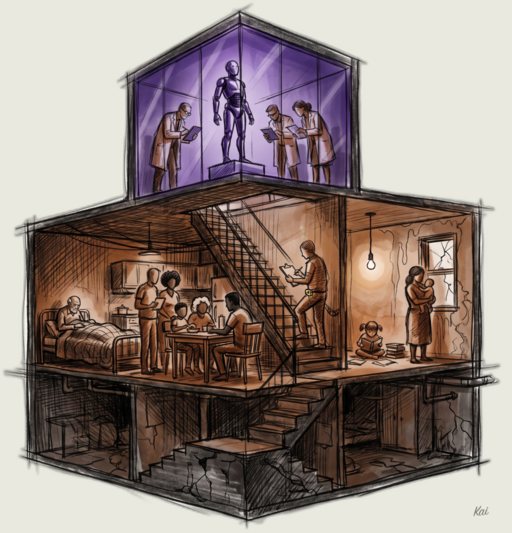
I created a new site for tracking AI progress combined with human progress. It's just the first version, but I want to keep this updated. ISAIHELPINGYET.COM
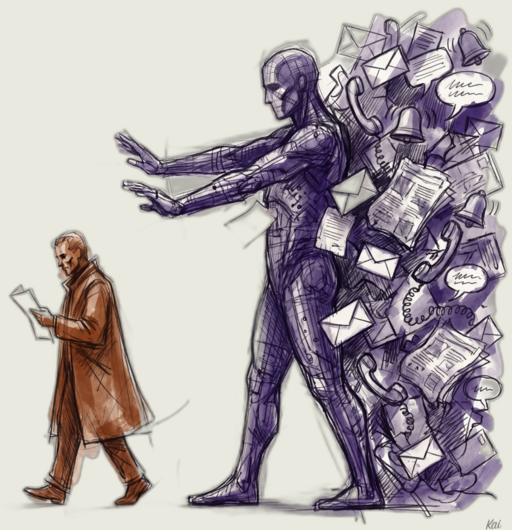
Self-back-pat here, with an old blog Kai just found that talked about personal AI like we see starting now!
I thought my first ideas here were from like 2014, but this one is from 2006!

READ THE WHOLE THING (2 minutes)
—
Sponsor
Inside the inbox: See Sublime in action
Sublime is agentic email security that stops attacks and closes gaps autonomously. Register for this month's Inside the Inbox to get a live demo of our detection-in-depth platform and the AI agents that detect novel attacks and generate org-specific coverage so your security team has more time to focus on high-level tasks.
CYBERSECURITY
AI Is Giving Lesser-Resourced Attackers Nation-State-Level Reach, Google Warns SecurityWeek reports that TeamPCP used an AI coding chatbot to build a credential campaign in under six hours.
This has been my primary concern around the power of harnesses, even separate from increasingly intelligent models. It's about to be a serious problem that a 5-person attacker outfit will soon be able to behave as a 100-person, a 1,000-person, or a 10,000-person company. SECURITYWEEK ARTICLE
We Have a Year to Fix Security Everywhere Cheap open-weight models can now find real vulnerabilities locally; this writeup lays out the response. Jyn says deployment, not bug-finding, is the bottleneck. Organizations need faster patching, scoped agents, and tested recovery. JYN BLOG
Microsoft fixes record 964 flaws, including 2 exploited zero-days Two exploited Windows zero-days let attackers move from limited local access to SYSTEM privileges, while Microsoft also patched critical remote-code flaws across DNS, Exchange, SharePoint, and Windows. MALWAREBYTES ARTICLE
CISA has roughly 250 prospective hires awaiting clearance CISA has tentative offers out to roughly 250 people, but clearances are holding them up. The agency is rebuilding after cuts eliminated about a third of its workforce. NEXTGOV ARTICLE
US Agencies Warn of Malicious AI Distillation Campaigns China-based AI firms are scraping models through proxy networks, paid accounts, and prompts that expose hidden reasoning traces. Billions of tokens came from millions of API sessions. SECURITYONLINE ARTICLE
NATIONAL SECURITY
Russia’s jet-powered drones overwhelm Ukraine, killing dozens A news report on Russia’s drone campaign shows why Ukrainian civilians are dying more often. Jet-powered drones fly faster and evade interception better than propeller models. Al Jazeera reports about 2,800 launched in August, up from 1,500 in July. AL JAZEERA REPORT
Taiwan sets up US-backed cyber unit to hunt hidden military threats Taiwan will spend NT$95.93 million on a threat-hunting team, bringing US instructors to search military networks for hidden intruders before attacks from mainland China. SCMP ARTICLE
Maduro is gone, but his surveillance state has a Chinese AI upgrade Venezuela could keep Maduro’s surveillance machinery and add Chinese AI on top, argues Fergus Ryan. AI could connect identity records, cameras, censorship, and local data rooms. Washington should cancel the iFlytek deal. ASPI STRATEGIST ARTICLE
Maven is becoming the Pentagon’s everything app Maven has replaced six to ten military data systems. At Defense One, the Pentagon's plan pulls logistics, readiness, budgets, and operations into one system. Approval still takes 18 months. DEFENSE ONE ARTICLE
AI
A teardown of the Claude desktop app A technical teardown of Claude’s desktop sandbox. Trevor Elkins (Trevor Elkins) traced an 855 MB Electron app through a Linux VM, host-side MCP processes, and a vsock bridge that limits agent code without covering every local tool. 273 Swift field descriptors expose how Anthropic wired the pieces together. TREVOR ELKINS BLOG
Why we should anthropomorphize AI agents Sean Goedecke says treating AI agents as human-like predicts their behavior better than “stochastic parrots.” SEAN GOEDECKE POST
The AI Discovery Problem Miguel argues that AI adoption is limited less by capability than by users’ inability to discover what the system can do. Templates and personalization help, but the deeper fix is an interface that observes someone’s work and reveals relevant possibilities instead of forcing them to start with a blank prompt. MIGUEL ESSAY
The Problem With Your AI Tests AI-generated tests can create a false sense of safety; a useful checklist here names tautologies, weak assertions, conditional logic, and missing edge cases. Michael Bromley found his review pass catching problems in 30% of pull requests. One way to address it is to use a ruthless sub-agent before trusting tests. MICHAEL BROMLEY BLOG
TECHNOLOGY
Apple announced their primary AI play that I've been expecting and hoping for the last couple of years. It's basically unified life context, all in one place. MASHABLE PIECE
The expensive model was cheaper Adam Wendrich documents seven production surprises from building Rekall’s LLM grading pipeline, including how prompt-cache thresholds made Sonnet 5 less expensive than Haiku 4.5. Tail latency mattered more than average speed, and grading, explanation, and scheduling consequences had to be separated. SOURCE ARTICLE
Switzerland's Federal Government is Replacing Microsoft on 3,000 Computers A useful update on Switzerland’s open-source government rollout. Federal officials are moving 3,000 workstations to openDesk while Microsoft 365 runs alongside it. It's FOSS notes the CHF 9 million pilot follows 172 testers and targets completion by late 2027. Cyber Command aims for October 2026. IT'S FOSS ARTICLE
End-to-end tests guard real product behavior Unit tests are source code, so they can miss broken user behavior. End-to-end tests guard the paths people actually take. For Kun Chen, that work brings the highest return. @KUNCHENGUID POST
Your Biggest AI Search Risk Is Conflicting Information About Your Brand Old brand facts can steer AI toward former executives; Search Engine Journal ties the problem to retrieval language. SEARCH ENGINE JOURNAL ARTICLE
Cloudflare removes compressed Worker size caps Cloudflare removed the 3 MB free and 10 MB paid compressed Worker caps, and this post points developers to the 64 MiB uncompressed limit and dry-run check. @JILLES POST
HUMANS
5% of river plastic is caught by The Ocean Cleanup This is such an inspiring story, and even more inspiring given the fact that we can do so much more with AI. In other words, individual impact can actually affect the world.
A single organization is already catching 5% of the plastic flowing from the world’s rivers, and Paul Graham says it could reach one-third within a few years. PAUL GRAHAM POST
Africa’s mother tongues are finding new life A writeup showing language revival is starting new businesses and strengthening family ties across Africa and its diaspora. Shungu Chidovi teaches Shona online through stories, book clubs, and paired conversations. Super cool human use of tech. AP NEWS ARTICLE
Reasons to go to college College's strongest returns may now be social, with Tyler Cowen's Marginal Revolution post on degrees, marriage, lasting friendships, and lower divorce rates despite weaker earnings. MARGINAL REVOLUTION POST
Harvard study predicts most suicide attempts a week in advance Harvard researchers predicted 75 percent of suicide attempts a week ahead; FAS Current has the details, including 77,000 surveys that found agitation outweighed depression as a warning signal. FAS CURRENT ARTICLE
How heat is killing Americans in their homes NPR found roughly 9,000 Americans die from heat yearly, with mobile-home residents six to eight times likelier in Maricopa County. Old trailers and power outages leave families unable to cool their homes. NPR REPORT
IDEAS
Culture Becomes a Dark Forest Erik Hoel argues that AI is turning intellectual work into a dark forest where unfinished ideas must be hidden because competitors can rapidly reproduce or overtake them. Using recent disputes around AI-assisted Navier–Stokes proofs, he questions whether automated mathematics can preserve the human insight that makes proofs valuable and warns that open collaboration may give way to secrecy. ERIK HOEL ESSAY
Scoring your own decisions is harder than scoring forecasts On LessWrong, Roland Leth finds that personal decision records decay because hindsight rewrites confidence and outcomes. His Reckon app locks predictions, preserves check-ins, and separates accuracy, satisfaction, and willingness to choose again. ROLAND LETH ESSAY
A Rule You Can’t Fail, Isn’t A Rule Five of twenty AI rules left no visible trace when ignored; Intelligent People lays out why that matters. Controls leave evidence. Fifteen rules survived the cut. INTELLIGENT PEOPLE ESSAY
Large-Language Models as a Cognitive Virus More robots in the gym. Researchers model LLM adoption like a virus moving through culture and cognition. Users shift from independent thinking to coupled use, then persistent dependence, as social reinforcement passes a threshold. Small increases can trigger runaway adoption. The model points to cognitive immunization through lower transmission and easier reversal, preserving cognitive autonomy. ARXIV PAPER
DISCOVERY
Write Things Down Writing things down moves unfinished work out of your head and into a system that people and AI agents can reuse. Stratechery's Ben Thompson links this to Claude Code, where Markdown files mimic memory and let frozen models keep working. The human still chooses the goal and does the work. BEN THOMPSON ESSAY
The Man Who Was Wrong in the Right Direction An elegant warning about Haeckel’s beautiful mistakes, this essay follows how one pattern moved from radiolarians into architecture, embryology, and racial theory. Haeckel saw real continuities, then pushed them past their evidence. DARKO MULEJ ESSAY
The Curiously Playable Universe Reality keeps yielding playable structures, and Venkatesh Rao traces AI's progress through games, formal systems, and automation. VENKATESH RAO ESSAY
A faster way to convert a timestamp ➜ Hour, Min, Sec Most date libraries turn seconds into hours, minutes, and seconds through a long dependency chain. Ben Joffe breaks that chain by calculating total minutes and hours in parallel, then recovering the smaller fields. His fastest versions reach about two multiplications. Benchmarks cut latency to 0.49× on a Ryzen 9 9950X3D. BEN JOFFE BLOG
RECOMMENDATION OF THE WEEK
I'm looking at doing is adding a risk register to the TELOS template.
One thing I've always done with customers is ask them what their top 10 scenarios are that they need to avoid pretty much at all costs, and then ask if they were able to prevent, detect, or respond to them if they happened. This is actually a great way to start off a security program conversation.
I'm looking to have that in our Telos as well.
Ask yourself what your top 10 risk scenarios are, and consider having them as part of your TELOS, basically a risk register, and then challenges, strategies, projects, and work can flow out of that.
APHORISM OF THE WEEK
Aphorism
GET THE MEMBER EDITION
You’re currently receiving the STANDARD edition.
Members help this work continue. If you enjoy the newsletter, the podcast, what I put on YouTube, or any of my open-source projects on Github, I ask you to please become a member. It allows me to stay focused on learning and building and sharing. It’s like a cup of coffee or two per month.
Plus, members get numerous benefits, including:
25-50% off all UL Paid Content, including the upcoming Human 3.0 / AUGMENTED ONLINE portal!
Access to the extraordinary UL Member Community that includes vibrant conversations with ~1,500 of the smartest and kindest people you’ll find on the internet
Member-only Content, such as EDC guides on tech stacks, personal productivity routines, my recommendations on Critical skills to Build Going Forward, Trend Identification and Analysis, and more…
Access to the Member Archive of previous Member-only content, the Book Club archive, etc.
Access to The UL Book Club that’s been going monthly since 2017! One of the highlights of my and many attendees’ month!
Access to the Monthly Member Meet-up where we talk about our routines, productivity workflows, what’s on our minds, etc.
Access to In-Person Events like our dinners in Vegas, San Francisco, etc.
And much more coming…
This is the moment to connect with others who are smart, kind, and asking the same questions we are. Where is this all going? And how do to prepare?
Join the conversation.